




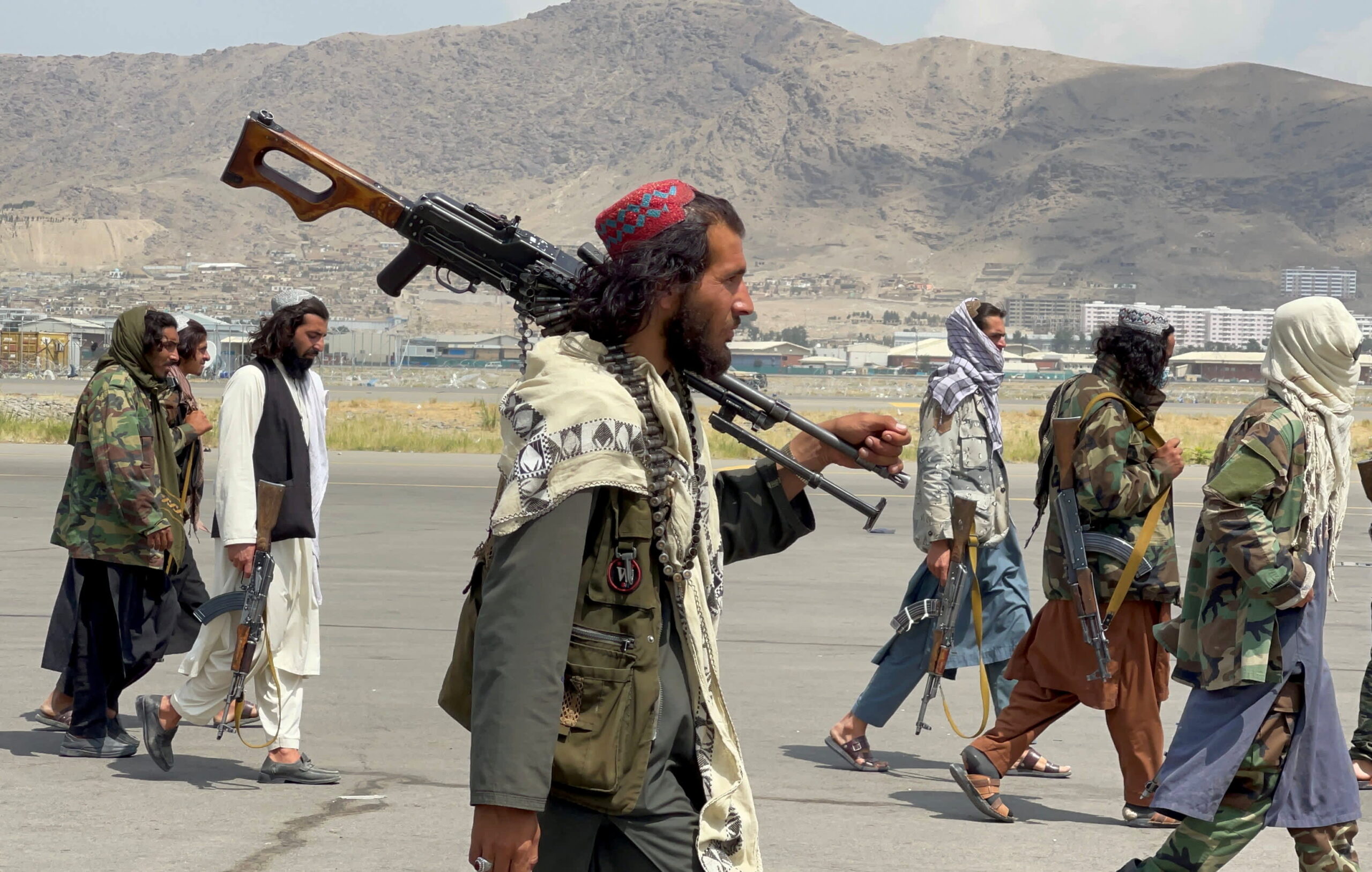
Four years after Taliban rule, Afghanistan faces dual security challenges from cross-border terrorism and internal extremist groups
Four years into Taliban governance, Afghanistan’s security landscape defies simple categorization.
The country has achieved unprecedented internal stability compared to the previous two decades. However, it simultaneously serves as a sanctuary for multiple security disruptors, actual and potential, that threaten regional security.
This paradox—domestic peace coexisting with cross-border terrorism—has become the defining challenge in Afghanistan’s relations with its neighbors.
The Taliban’s most notable accomplishment has been establishing domestic security control. Unlike the previous government, which struggled to maintain authority beyond major urban centers, the Taliban has effectively eliminated internal armed opposition and significantly reduced street crime and corruption. This internal pacification has created what many observers describe as a “peaceful” Afghanistan, in a stark contrast to the insurgency-plagued country of the past two decades.
However, this stability comes at a human cost, such as the erosion of women from public life. Moreover, the Taliban’s security comes with critical limitations. The Taliban’s security apparatus, while effective at maintaining order, operates within narrow ideological constraints that prevent comprehensive counterterrorism operations against all extremist groups.
This selective approach to security has created havens for organizations that pose significant threats to regional stability.
The most immediate security concern for Pakistan stems from the Tehrik-e-Taliban Pakistan (TTP), which found renewed sanctuary in Afghanistan under Taliban rule. Despite Taliban assurances of action, TTP operations against Pakistani targets have intensified, leading to a deteriorating security situation along the Pakistan-Afghanistan border.
Pakistan has been forced to conduct intelligence-based operations that has resulted in instability and political complications in its border regions. These developments indicate that Pakistan is taking unilateral action due to insufficient Taliban cooperation in addressing TTP sanctuaries.
The Taliban’s response to TTP presence appears limited to tactical relocations rather than comprehensive elimination. While Taliban officials claim to have arrested individuals and moved groups away from border provinces, these measures fall short of the decisive action demanded by Pakistani authorities.
China faces similar challenges with the East Turkestan Islamic Movement, now rebranded as the Turkestan Islamic Party. Despite China’s significant economic interests in Afghanistan and its role as a potential key partner for the Taliban government, Beijing remains deeply concerned about ETIM’s continued presence in Afghan territory.
Like the TTP, ETIM has reportedly been relocated away from sensitive border areas in Badakhshan rather than dismantled. This approach satisfies neither China’s security requirements nor the broader regional demand for comprehensive counterterrorism action.
The situation regarding Baloch separatist organizations operating from Afghanistan remains particularly opaque. Groups such as the Baloch Liberation Army (BLA) and Baloch Liberation Front, along with Iran-focused organizations like Jaish-e-adl, pose threats to both Pakistan and Iran. The southwestern provinces of Afghanistan, bordering both countries, have become sanctuaries for these groups, creating a security challenge that affects multiple regional stakeholders.
The Taliban’s approach to these organizations is vague, with less concrete measures taken to address their presence.
While managing external terrorist groups, the Taliban simultaneously faces its own internal security challenge from the Islamic State Khorasan Province (ISKP). This organization represents a direct operational threat to Taliban authority, conducting attacks against Taliban installations, minority communities, and civilian targets.
The Taliban’s counterterrorism operations against ISKP demonstrate their capability for decisive action when their own interests are threatened. However, this selective application of counterterrorism measures highlights the political nature of the Taliban’s security policies rather than a comprehensive approach to eliminating all forms of extremist violence.
The depth of regional security concerns became evident during the recent China-Pakistan-Iran-Afghanistan quadrilateral meeting in Kabul. For the first time in such multilateral engagements, the meeting concluded without a joint statement, with each country issuing separate declarations. The absence of consensus reflects each country’s frustration with Taliban explanations and clarifications regarding terrorist group activities. Pakistan, China, and Iran all maintain that the current Taliban measures are insufficient to address their security concerns.
Afghanistan’s selective counterterrorism approach creates a fundamental obstacle to international recognition and engagement. Regional neighbors find themselves in an impossible position: they cannot ignore Afghanistan due to geographic proximity and economic interests, yet they cannot fully engage due to unresolved security concerns.
This dilemma is particularly acute for Pakistan, which faces the most immediate terrorist threat from Afghan-based groups. Recent unilateral operations demonstrate the breakdown of cooperative counterterrorism mechanisms and the emergence of more confrontational approaches.
For meaningful regional engagement and potential international recognition, Afghanistan must address several security prerequisites:
- Rather than selective relocations, regional neighbors demand the complete dismantling of terrorist organizations operating from Afghan territory. This includes not just TTP and ETIM, but also Baloch separatist groups and any other organizations conducting cross-border operations.
- Effective counterterrorism requires sustained intelligence sharing and operational coordination between Afghanistan and its neighbors. Current Taliban approaches appear to prioritize sovereign action over cooperative security arrangements.
- Regional stakeholders need clear assurances about Afghanistan’s long-term counterterrorism commitments, backed by verifiable actions rather than diplomatic assurances.
Afghanistan’s current security paradox, internal stability combined with external terrorism sanctuaries, represents an unsustainable model for regional relations.
While the Taliban has demonstrated effective domestic security capabilities, their selective approach to counterterrorism threatens to undermine the very stability they have achieved. The Taliban government faces a critical choice: embrace comprehensive counterterrorism that addresses all regional security concerns, or risk increasing isolation and potential confrontation with neighbors.
For Afghanistan’s neighbors, the challenge remains balancing legitimate security concerns with the practical need for engagement. However, as recent developments demonstrate, security considerations are increasingly taking precedence over diplomatic niceties, potentially leading to a more confrontational regional security environment if current trends continue.