




Natural shocks alone do not explain Afghanistan’s latest tragedy. Each earthquake collides with war, poverty, and political isolation, hence multiplying fragility.
Afghanistan has lived for decades in the shadow of compounding disasters. This month’s earthquake in the east — a 6.0-magnitude tremor that leveled villages in Kunar, Nangarhar, Laghman, and Nuristan — has killed more than 1,400 people, injured thousands, and revealed once again how natural shocks converge with the country’s political and humanitarian collapse.
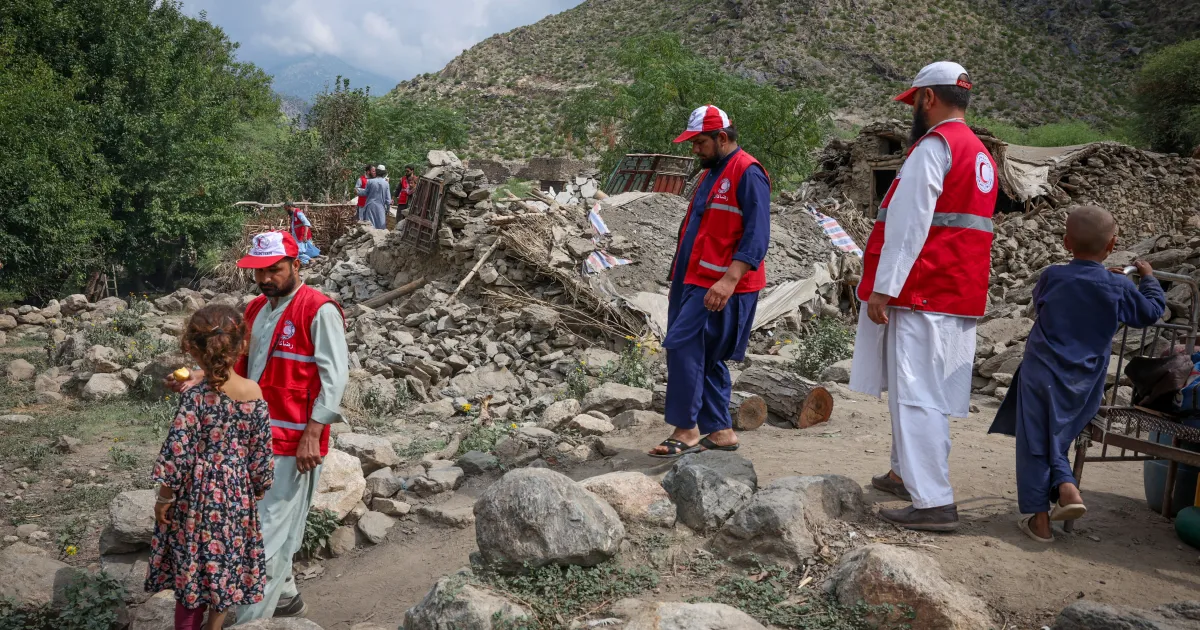
The physical destruction was immediate and merciless. Mud homes disintegrated, families were buried together, and mountain roads were blocked by landslides. Survivors resorted to digging through rubble with their hands.
The earthquake is not an isolated disaster. It struck at a moment when Afghanistan’s humanitarian lifelines were already fraying. Since the Taliban’s return to power in 2021, international aid — once the country’s primary support — has dwindled. The United States, long the largest donor, has cut almost all assistance. European governments have followed, citing the Taliban’s intensifying restrictions on women’s rights. The United Nations reports that by 2025, less than a third of the country’s humanitarian needs will be met, even as more than half the population depends on aid for survival.
The crisis of displacement has compounded these pressures. More than two million Afghans have been expelled or pressured to leave Pakistan and Iran this year alone, many returning to provinces already unable to provide basic services. Some were still on the move back into Afghanistan when the earthquake struck.
Afghanistan’s vulnerability is not only the result of poverty or misfortune: it is very much structural. The country sits on active fault lines, but the scale of devastation reflects decades of war, political isolation, and environmental degradation. Provinces such as Kunar are rich in forests and minerals; however, unregulated exploitation and deforestation have left the land unstable and prone to flooding. During two decades of international intervention, corruption and mismanagement hollowed out institutions. The Taliban’s pariah status today ensures that even emergency relief arrives in fragments, delivered by overstretched UN agencies and NGOs.
In this sense, the earthquake is a case study in what it means for a nation to be cut off from the world. Each natural shock collides with man-made fragilities — poverty, displacement, environmental neglect — to produce a crisis far greater than the tremor itself. For Afghans, disaster is cumulative.
International responses will be familiar: pledges from a few governments, emergency funds from the UN, perhaps a temporary surge of media attention. But as the cycle repeats, the baseline of suffering deepens. The world’s political choice to isolate Afghanistan because of the Taliban may be defensible on human rights grounds, yet it is ordinary Afghans who bear the costs.
Afghanistan is not unique in suffering disasters amid conflict and authoritarianism, but its predicament is unusually pungent. Without a recalibration of engagement that finds ways to meet humanitarian needs without legitimising the regime, each earthquake, flood, or drought will push the country further into crisis.
The recent tremors remind us that for Afghanistan, the most destructive fault line is not only geological. It runs through the fracture between international isolation and the daily survival of its people.