




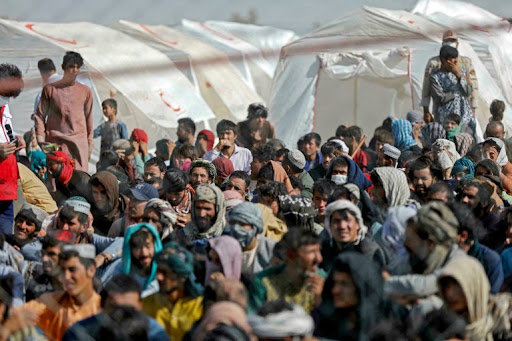
As Afghanistan faces a wave of forced returns from Pakistan and Iran, the lack of reintegration capacity and international coordination risks turning a migration challenge into a destabilising humanitarian crisis.
Afghanistan, already contending with institutional collapse and protracted humanitarian need, now faces an additional strain: the return of more than 1.3 million citizens in the first half of 2025. Many of these returns have occurred under duress, following deportation drives in Pakistan and Iran. Border crossings like Islam Qala are now overwhelmed by a daily tide of exhausted families with few prospects awaiting them at home.
Roza Otunbayeva, the UN Secretary-General’s Special Representative for Afghanistan, visited Islam Qala this month and publicly appealed for immediate international support. Describing the influx as a “test of our collective humanity,” she warned that the country “cannot absorb this shock alone.”
Returnees are arriving to a country where 70 per cent of the population lives below the poverty line and where basic services remain fractured. Since the Taliban’s return to power in August 2021, international assistance has declined sharply, and restrictions on women’s participation in public life have further constrained recovery. Women and children now make up a significant portion of returnees, and their access to healthcare, education, and legal protection remains limited or non-existent.
Relief agencies operating in Afghanistan are confronting acute funding shortfalls. Otunbayeva noted that humanitarian actors are being forced into “agonising choices” between shelter, food, and safe transit. The United Nations has attempted to balance emergency aid with modest reintegration support, but the scale of returns has quickly outpaced available resources. Observers warn that, without investment in infrastructure and livelihoods, pressures on host communities could intensify social fragmentation and spur renewed displacement.
The Taliban authorities, for their part, have welcomed returns rhetorically, but lack the administrative capacity to manage them. In some areas, de facto officials have allowed limited aid access, but overall, there is no national strategy for reintegration. The disconnect between provincial needs and central authority remains a persistent feature of Taliban governance.
Since the withdrawal of U.S. and NATO forces and the abrupt collapse of the Islamic Republic, Afghanistan has largely disappeared from the centre of international policymaking. The current returnee crisis, however, underscores the enduring consequences of that vacuum. As Otunbayeva remarked, “The cost of inaction will be measured in lives lost and conflicts reignited.”
In this context, the return of over a million Afghans in the space of months is more than a logistical or humanitarian challenge. It is a symptom of the region’s failure to develop a coordinated framework for post-conflict recovery and cross-border mobility. It is also a reminder that, in the absence of political will, humanitarian principles become negotiable.
Afghanistan has long absorbed the consequences of international decisions made elsewhere. The present crisis, driven by regional expulsion and global neglect, continues that pattern. For the returnees, the idea of home remains fraught, less a place of refuge than a site of economic and political abandonment. Whether the international community chooses to address this reality or merely document its consequences remains an open question.
Afghanistan’s predicament also raises larger questions about the architecture of international refugee protection and the limits of multilateral response in the absence of geopolitical consensus. The disconnect between humanitarian principles and regional enforcement practices has never been more visible. In theory, return should follow conditions of safety, voluntariness, and dignity. In practice, deportation policies are being shaped by domestic politics, demographic anxiety, and security concerns in neighbouring states. For Afghanistan, this disjuncture is not new, but the current scale and pace of returns expose just how little leverage remains to ensure even the most basic protections for displaced populations. If this crisis does not prompt a strategic rethink—one that integrates humanitarian obligations with long-term regional stability—the cycle of displacement and reactive aid will persist, with diminishing returns for all involved.